Best time to trek Nepal: Annapurna vs Everest
Compare Annapurna and Everest trekking seasons using historical temperature, monsoon rain and snow signals, with a clear warning about model limits.
9 min read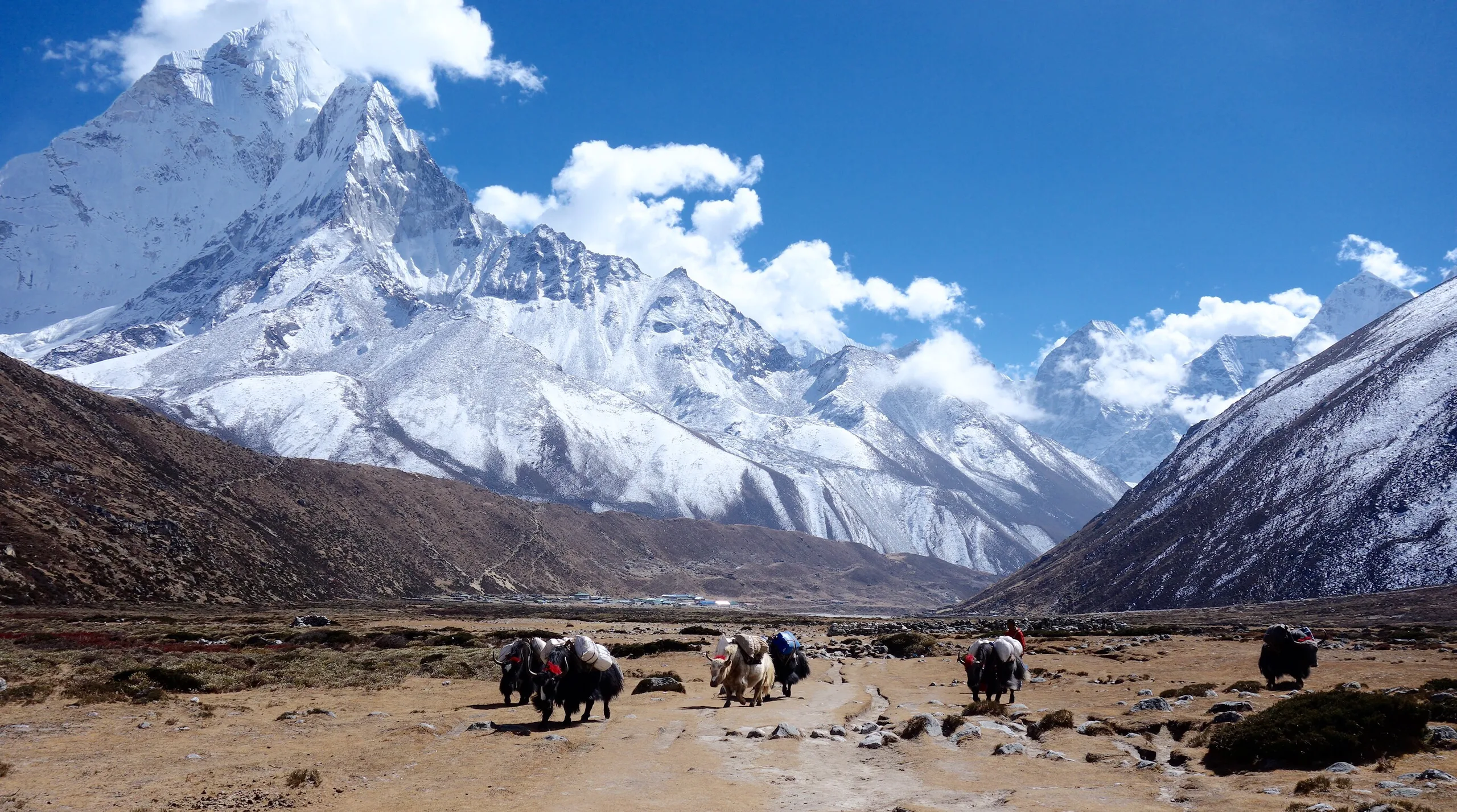
“A warm month at 4,000 metres is not automatically a good trekking month. In these records, the warmest period is also the wettest.”
The best time to trek Nepal is usually discussed as a contest between spring and autumn. The historical records for Annapurna and the Everest Region support that framing only after one important correction: this dataset measures selected high-elevation model cells, not complete trekking routes. Annapurna is represented by a southern trekking-corridor cell at 4,296 metres. The Everest Region uses a lower Khumbu corridor cell at 3,863.8 metres. Both are deliberate replacements for glacier-centred cells, yet neither describes the full ascent from a valley trailhead through several climate zones. The figures are therefore useful for comparing high-route climate signals, especially the shift from snow to monsoon rain and back again. They cannot decide acclimatisation, access, landslide exposure, flight reliability, lodge schedules or current trail safety.
Spring opens first in the Everest record
| Month | Annapurna | Everest Region | What changes |
|---|---|---|---|
| April | Withheld · 1.9 °C · 77.24% snow days | Eligible · 6.4 °C · 31.24% snow days | Everest clears the snow gate first |
| May | Eligible · 5.3 °C · 96.77% wet days | Eligible · 8.7 °C · 89.59% wet days | Both open, rain already frequent |
| October | Eligible · 3.6 °C · 68.85% wet days | Eligible · 7.2 °C · 49.95% wet days | Rain retreats faster in Everest |
| November | Eligible · 0.6 °C · 33.05% wet days | Eligible · 4.5 °C · 12.00% wet days | Drier, colder autumn profile |
April is the clearest difference. The Annapurna cell remains below the recommendation gate because modelled snow days occur on 77.24 percent of valid dates and its snow component falls to four. The Everest cell records 31.24 percent snow days and passes with a score of 62. This does not mean that an entire Everest trek is open or that every Annapurna route is closed. It means the two selected high-route cells cross the project's climate threshold at different times. By May both are eligible, but calling May simply dry would be inaccurate in this dataset. Wet-day frequency has already reached 96.77 percent at Annapurna and 89.59 percent in the Everest Region. The values describe any modelled precipitation during a valid day, not all-day rain, yet they are strong enough to demand careful interpretation.
Why the highest summer scores are not a booking instruction
- JuneSnow retreats; monsoon rain takes overAnnapurna records 369.1 mm and Everest 292.4 mm of mean monthly precipitation.
- JulyWarmest central range, wettest signalBoth cells record wet days on 100% of valid dates; rainfall exceeds 500 mm.
- SeptemberStill wet despite good scoresWet-day frequency remains 98.95% at Annapurna and 95.81% in Everest.
- NovemberDrier but colderEverest records 12.00% wet days; Annapurna 33.05%, with colder high-cell temperatures.
The overall score can look strongest in the monsoon because temperature and snow components improve sharply while precipitation is not a hard eligibility gate. Annapurna scores 72 in July and August even though its precipitation component is zero and wet-day frequency is 100 percent. Everest scores between 73 and 75 from June through September while wet-day frequency remains between 95.81 and 100 percent. That is not a contradiction in the data; it is a reason to avoid reading one number as a travel recommendation. The score combines five weighted climate components, and rain can be outweighed by warmer temperatures, fewer snow days, long daylight and low heat stress. Grid-cell wind is excluded. For an actual trekking plan, the individual rain and snow signals are more informative than the summer total. The article therefore treats the monsoon months as a warning about aggregation, not as a claim that they are the best time to book.
Within this limited comparison, autumn supplies the cleaner planning signal. In October, the Everest cell is warmer, less frequently wet and less snow-affected than Annapurna: 7.2 versus 3.6 °C, 49.95 versus 68.85 percent wet days, and 10.41 versus 27.74 percent snow days. November widens the rain-frequency gap to 12.00 versus 33.05 percent, while means fall to 4.5 and 0.6 °C. The Everest record still remains eligible in December, but a historical cell result must never be turned into a blanket winter-trek recommendation. The sensible workflow is to use these figures to compare high-route climate profiles, choose a season for further research, and then check the exact itinerary with current local sources. Langtang is deliberately not ranked alongside the two eligible records until its precipitation evidence is validated or the hold is removed.