Best time to hike Japan: why the route changes the season
Japan has no single hiking season. Five route contexts show how elevation, historical snow frequency and summer rain reshape the best months.
8 min read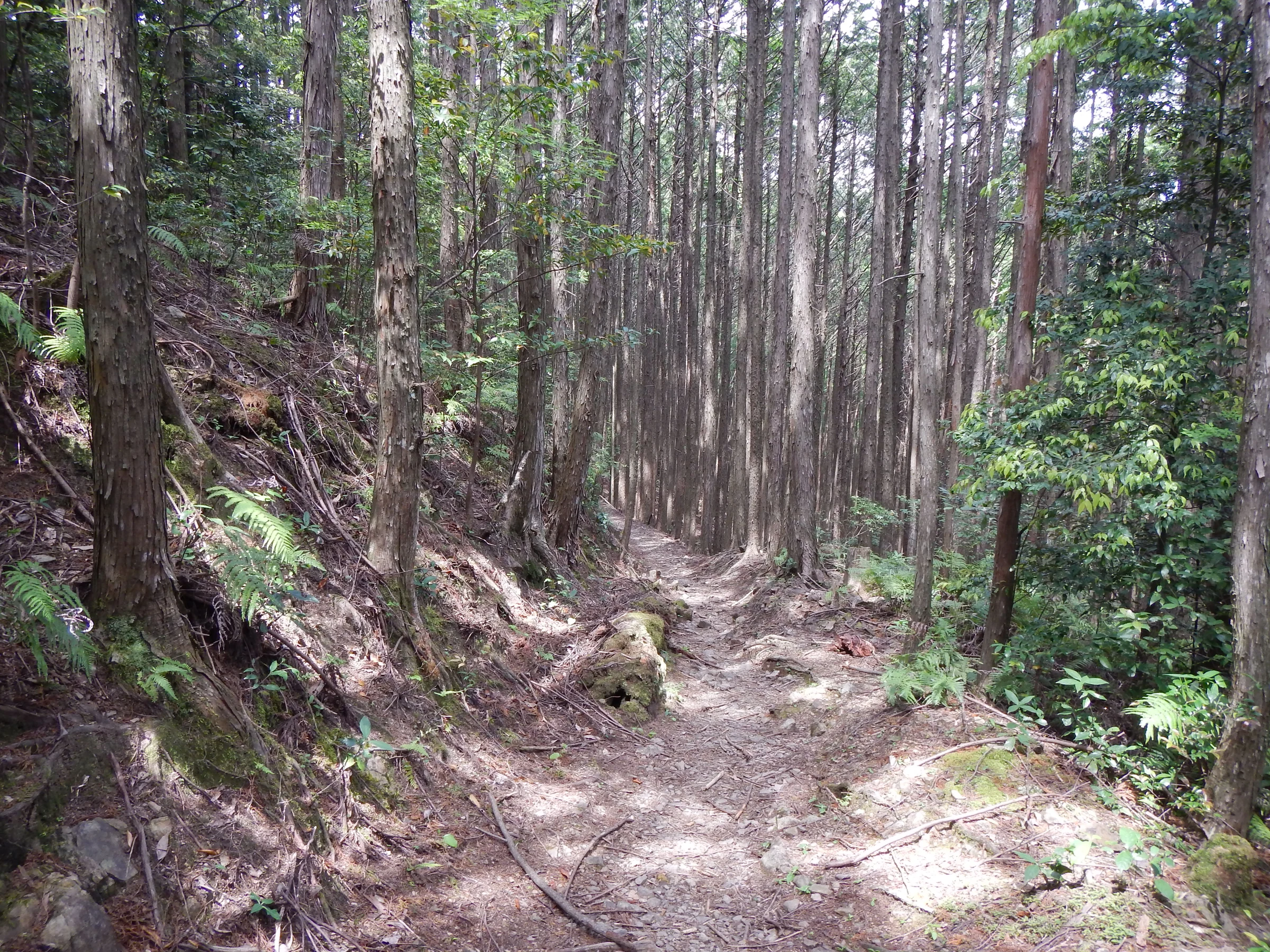
- JanuaryTwo cells eligible, three withheldKumano Kodo and Yakushima remain above the gate; the three higher mountain cells do not.
- AprilLower routes at their strongestKumano Kodo scores 86 and Yakushima 84 while the mountain cells remain snow-limited.
- June to OctoberAll five cells eligibleThe shared window opens, but summer wet-day frequency remains high.
- NovemberThe mountain window closesKamikochi and Tateyama fall below the snow threshold; lower cells remain eligible.
Searching for the best time to hike Japan assumes that one national calendar can answer the question. These five public records show why the route must come first. Kumano Kodo and Yakushima use selected representative cells at 412.5 and 520.2 metres. Both remain above the project's critical climate thresholds in all twelve months. Daisetsuzan, Kamikochi and Tateyama use cells between 1,361.9 and 1,858.9 metres and share a much narrower June to October eligible window. The contrast does not turn elevation into a universal law, and it does not describe every Japanese trail. It shows that these particular route contexts carry different historical temperature and snow signals. A useful planning question is therefore not simply “Which month is best for Japan?” but “Which route family am I considering, and what does its selected climate record permit me to investigate further?”
Winter separates the lower records from the mountain records
| Route context | Cell elevation | Mean | Snow days | Result |
|---|---|---|---|---|
| Kumano Kodo | 412.5 m | 5.9 °C | 12.53% | Eligible · 74 |
| Yakushima | 520.2 m | 9.8 °C | 0% | Eligible · 75 |
| Daisetsuzan | 1,361.9 m | -13.3 °C | 100% | Withheld · 22 |
| Kamikochi | 1,858.9 m | -7.5 °C | 100% | Withheld · 24 |
| Tateyama | 1,832.3 m | -7.5 °C | 100% | Withheld · 21 |
January makes the split unmistakable. Kumano Kodo is cool, with a 5.9 °C hiking-window mean and modelled snow days on 12.53 percent of valid dates, but every critical component stays above the withholding floor. Yakushima is milder at 9.8 °C and records no modelled snow days in the selected cell, although 53.73 percent of dates are wet. The three mountain records tell another story. Their means fall to -7.5 °C at Kamikochi and Tateyama and -13.3 °C at Daisetsuzan, while snow-day probability reaches 100 percent. Their snow components fall to zero. The model therefore withholds a recommendation. That wording matters: it is not a trail-closure notice and cannot establish whether a particular low approach, road or facility is accessible. It only says that these historical cell records fail the project's climate gate.
Eligible summer months can still be very wet
When the mountain window opens in June, rain becomes the next reason to read beyond a green label. Daisetsuzan records wet days on 56.76 percent of valid June dates. Kamikochi reaches 62.86 percent, and Tateyama 68.38 percent. July is wetter still in two of the selected cells: 73.09 percent at Kamikochi and 81.75 percent at Tateyama. Those months remain eligible because precipitation is a scored comfort factor rather than one of the four critical gates. The result is useful precisely because it resists a false binary. A month can clear the cold, snow, heat-stress and daylight thresholds while still demanding serious rain planning. On the lower records, summer is not automatically the strongest period either. Kumano Kodo's July remains eligible but scores 61 as the mean reaches 26.1 °C and wet-day probability 67.19 percent. The route choice changes which compromise deserves attention.
October and November show why a country-wide answer breaks down. Daisetsuzan still clears the gate in October, although its 5.4 °C mean, 44.88 percent snow-day probability and snow component of 27 leave little margin. By November, Kamikochi and Tateyama have snow components of 14 and 10 and are withheld. Kumano Kodo, in contrast, reaches one of its two strongest scores in November: 86, with a 13.9 °C mean and 30.48 percent wet days. The right workflow is to select the route, inspect its monthly climate profile, and only then consult current official access and safety information. This article deliberately excludes Mount Fuji because its inclusion could make a historical climate gate look like access guidance. The model can narrow the calendar; local authorities and current conditions must finish the decision.