Best time to hike Greece: Crete, Olympus and Pindus
Compare Crete, Mount Olympus and Pindus using 1991–2025 climate data, from spring in Samaria Gorge to the drier Pindus summer.
8 min read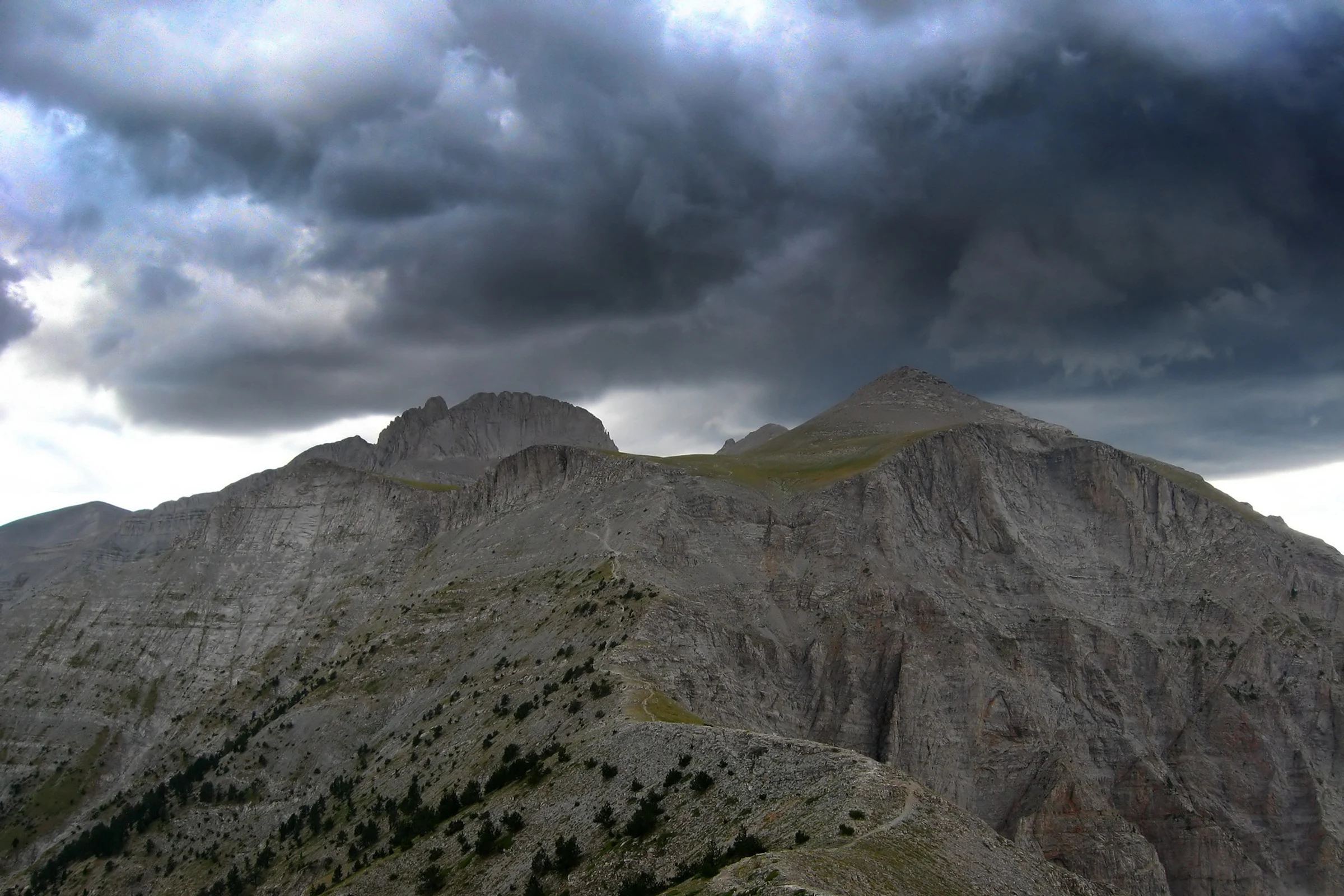
The best time to hike Greece changes with the landscape. In the public 1991–2025 records, the selected Samaria Gorge cell on Crete passes the project's critical climate thresholds in all twelve months. Mount Olympus passes from March through December, while Pindus passes from April through November. Those wide calendars do not mean that every route is open or comfortable. The three representative cells sit at 1,155.5 metres in Samaria, 1,136.5 metres on Olympus and 1,311.5 metres in Pindus, yet latitude and rainfall produce different seasonal choices. Crete reaches its highest score in May. Olympus has an almost flat July-to-September summit in the ranking. Pindus peaks in September after an exceptionally dry midsummer.
| Region | Temperature | Wet days | Monthly rain | Snow days | Score |
|---|---|---|---|---|---|
| Samaria Gorge | 17.5 °C | 16.50% | 32.2 mm | 0% | 95 |
| Mount Olympus | 14.8 °C | 46.91% | 108.0 mm | 0% | 85 |
| Pindus | 14.1 °C | 42.30% | 76.1 mm | 0% | 87 |
May is the clearest three-region compromise
May works because snow pressure has relaxed at all three cells while summer heat has not yet become the main question. Samaria averages 17.5 °C and only 16.50 percent wet days. Pindus is cooler at 14.1 °C, with 76.1 mm of monthly rain and a score of 87. Olympus reaches 14.8 °C but remains wetter: 108.0 mm and a 46.91 percent wet-day probability. Mean daylight is about 14.0 hours on Crete and 14.4 hours at the two northern cells. A traveller combining the three regions therefore gets a coherent temperature window but not one weather pattern. The same month can mean a relatively dry gorge day on Crete and a much larger rain contingency on Olympus.
“Greece has one calendar on the map and three different climate decisions in these records.”
July reveals why a national summer label is too blunt
- Samaria Gorge24.2 °C · 3.0 mmOnly 2.21% wet days and 14.3 hours of mean daylight; the score eases to 87 as heat becomes more relevant.
- Mount Olympus21.5 °C · 88.5 mmA 31.61% wet-day probability keeps precipitation in the decision despite a score of 87.
- Pindus21.8 °C · 30.8 mmThe wet-day probability falls to 18.06%, producing a score of 90 before September reaches 92.
July is nearly rainless at the selected Samaria cell, substantially drier in Pindus than in spring, and still meaningfully wet on Olympus. That contrast changes the planning logic. On Crete, an early start, water and heat exposure become central even though the temperature component remains inside the project's critical threshold. Pindus offers the strongest dry-summer signal of the northern records: monthly rain falls from 76.1 mm in May to 30.8 in July and 28.6 in August. Olympus does not follow that curve as sharply. Its July total is 88.5 mm and the wet-day probability remains above thirty percent. September then produces the highest Pindus score, 92, at 16.9 °C and 64.3 mm. Olympus stays at 87 with 17.2 °C, while Samaria returns to 92 as its mean temperature falls to 21.0 °C.