Best time to hike the Dolomites: June to October
Compare June to October hiking weather in the Dolomites, including temperature, wet-day frequency and the autumn return of modelled snow.
8 min read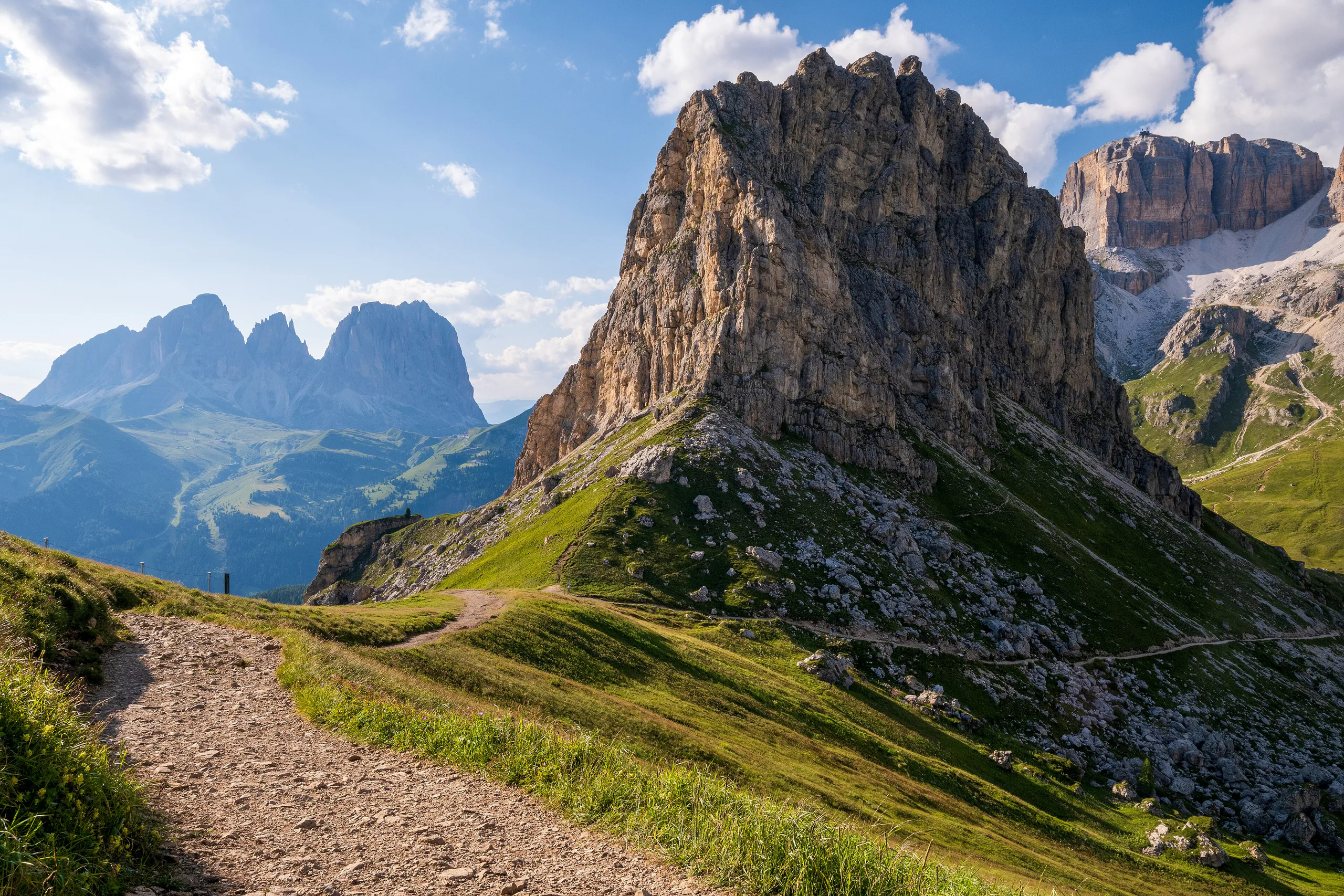
- MayOnly Brenta clears the gateThe 2,059.7 m Dolomites cell is withheld by its snow signal; the lower Brenta cell remains eligible.
- June to AugustWarmest, longest and wettestBoth cells are eligible, with long daylight and frequent historically wet days.
- SeptemberThe balance shiftsWet-day frequency falls while both cells still retain good overall scores.
- OctoberDrier, colder, more snow-sensitiveBoth cells remain eligible, but temperature and modelled snow reduce the margin.
The best time to hike the Dolomites is often reduced to a simple summer answer. The two public records used here make the decision more useful. The selected Dolomites cell represents a higher context at 2,059.7 metres, while the Brenta Dolomites cell represents a lower context at 1,538.9 metres. The first clears the project's historical climate gate from June through October; the second from May through October. That one-month difference does not establish an opening calendar for either mountain group. It shows how two selected model cells within the broader Dolomites can enter the hiking season at different times. The practical choice is then shaped by three competing signals: summer warmth and daylight, frequent rain from June through August, and the return of colder and snowier conditions in autumn.
June, July and August offer warmth, but not dryness
| Month | Dolomites | Brenta Dolomites | Planning signal |
|---|---|---|---|
| June | 12.1 °C · 71.43% wet days | 14.2 °C · 78.76% wet days | Long daylight, frequent rain |
| July | 13.9 °C · 66.54% wet days | 15.8 °C · 80.28% wet days | Warmest central range |
| August | 13.7 °C · 63.87% wet days | 15.6 °C · 74.65% wet days | Warm, still often wet |
Summer solves the cold-and-snow problem more clearly than it solves the rain problem. In July, modelled snow-day probability falls to 0.74 percent at the higher Dolomites cell and zero at Brenta. The central hiking-window temperatures are mild rather than hot: 13.9 °C and 15.8 °C. Yet wet-day frequency reaches 66.54 percent in the Dolomites record and 80.28 percent in Brenta. Mean monthly precipitation is also substantial at 203.9 and 272.2 mm. August changes the numbers but not the trade-off. Both records stay warm and nearly snow-free, while wet-day frequency remains above 63 percent. These are monthly historical aggregates, not a statement that it rains continuously or at the same time every day. They do mean that a traveller choosing midsummer for warmth and long daylight should build the trip around current forecasts, flexible starts and route-specific thunderstorm guidance rather than treating summer as a dry guarantee.
September is the middle ground; October has less rain and less margin
September reduces rain frequency without yet producing the strongest snow signal. The Dolomites cell records 46.95 percent wet days and 137.5 mm of mean monthly precipitation; Brenta records 55.14 percent and 155.4 mm. Their hiking-window means fall to 9.6 and 11.7 °C, while modelled snow-day probability is 11.90 percent at the higher cell and 3.52 percent at the lower one. This is why September can be a sensible climate compromise in these records, not because it guarantees settled weather. October is historically drier by frequency, but the colder side becomes harder to ignore. The Dolomites mean falls to 5.6 °C and its 10th percentile to -0.4 °C, with modelled snow days on 36.87 percent of valid dates. Brenta is milder at 7.7 °C and 20.74 percent snow days. Both still clear the project gate, yet neither result confirms that high passes, lifts, huts or protected routes remain accessible.
A useful month choice therefore starts with the kind of compromise you accept. June to August offers the warmest central temperatures and the longest days, but rain planning is essential. September gives up several degrees and some daylight while reducing historical wet-day frequency. October reduces that frequency further but adds colder tails and a stronger snow signal, especially at the higher cell. May belongs only to the Brenta record in this comparison because the higher Dolomites cell fails the snow threshold. After choosing a month, discard the idea that the whole range behaves like one grid cell. Match the exact route and elevation to current official information, check transport and hut dates, and use a short-range mountain forecast. The historical record is best used to choose what to investigate, not to replace the investigation.